


Topic world · ages 4–10
Cats and Dogs
Our oldest animal friends. Find out where dogs and cats came from, how they smell and feel the world, and how they tell us what they feel with their ears, tails and eyes. Then help Piko read Caramel and Smoky in the game and try the 10-question quiz.
Cards
How did we become friends?
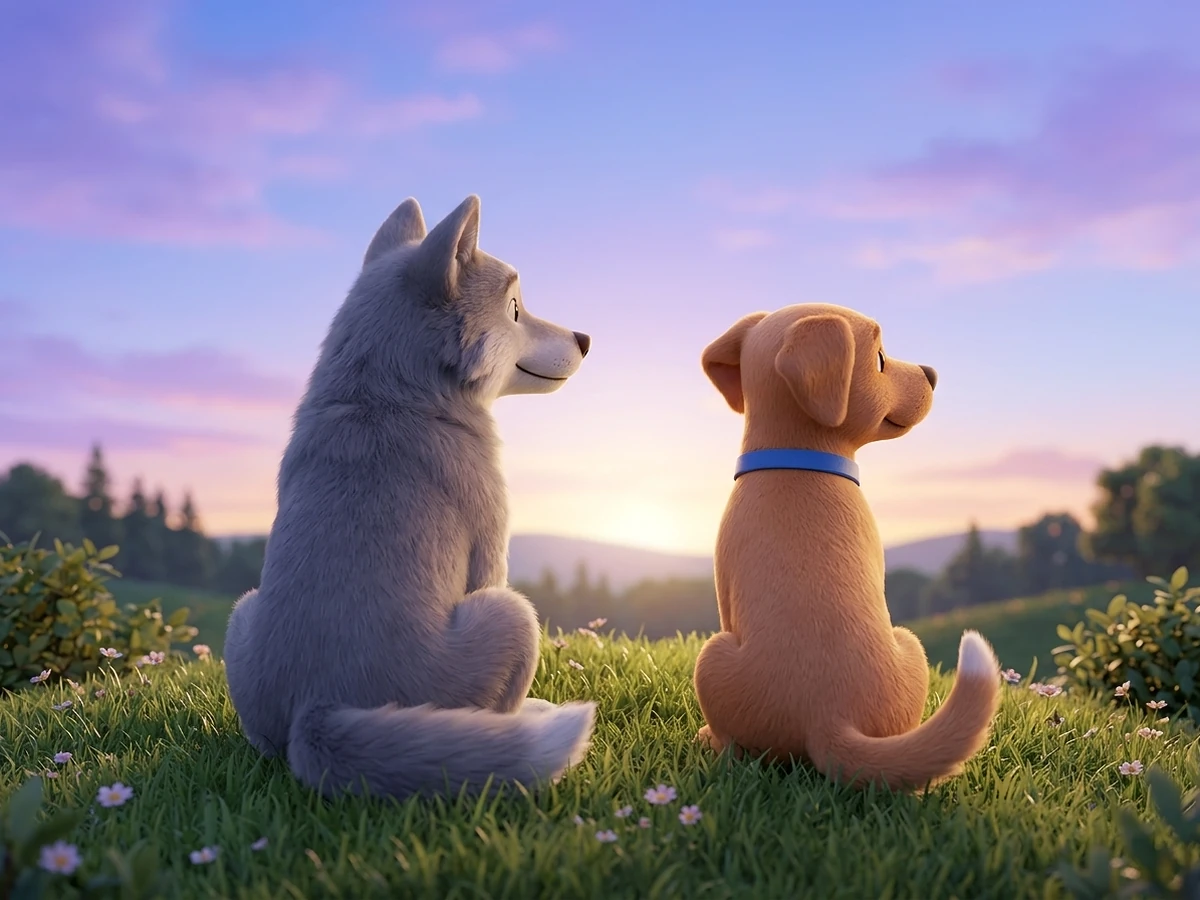
The ancestors of dogs were wolves
All dogs come from an old kind of wolf that no longer lives today. Their closest living relative is the grey wolf. Dog bones about 15,000 years old that look like today's dogs have been found.
Why? Some wolves came close to the places where people lived, looking for leftover food. The tame wolves that were not afraid of people stayed near them, and their pups grew up tame too. Over thousands of years these wolves became friends who helped with hunting and guarded the home.
Try at home: Look at a picture of a dog and a picture of a wolf with a grown-up. What is the same about their ears, noses and tails? What is different?
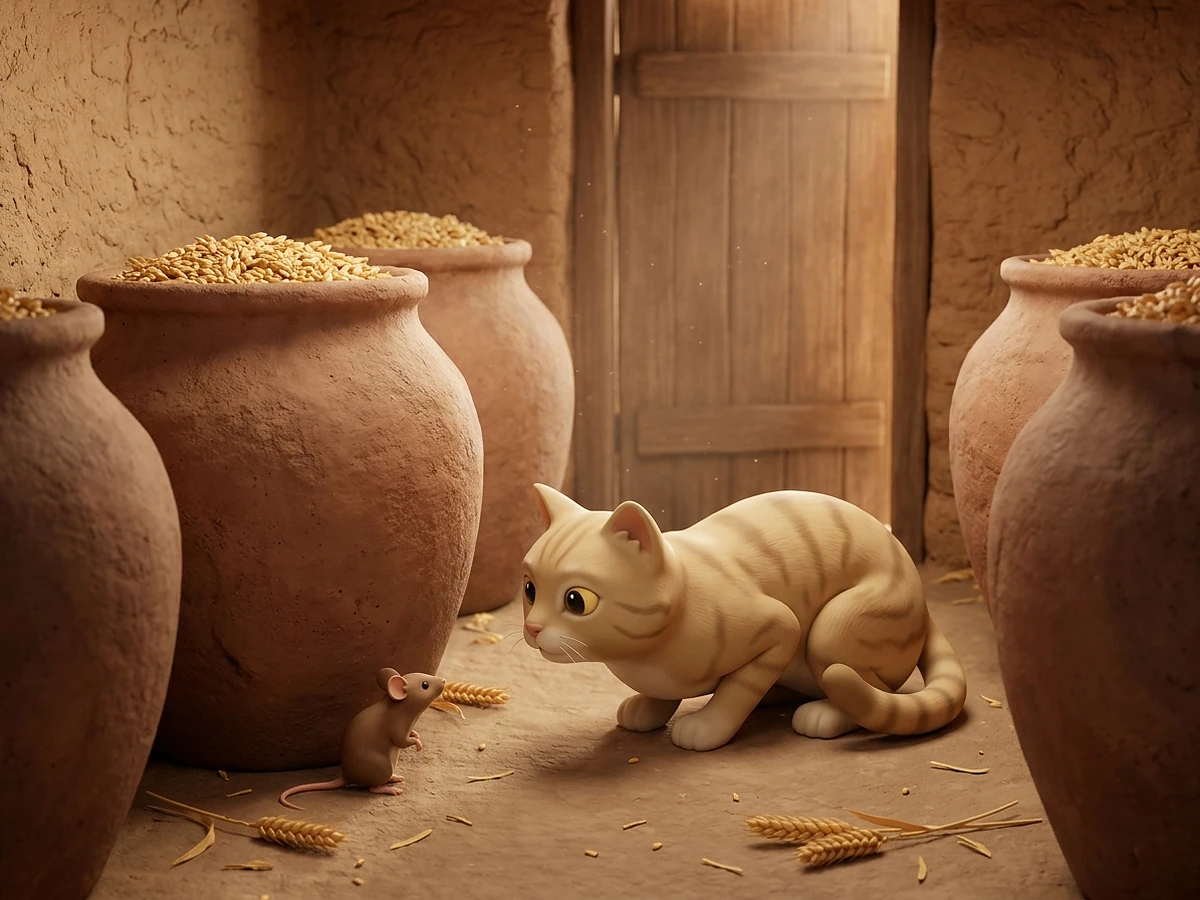
Cats came to live with people thanks to mice
On the island of Cyprus, a grave about 9,500 years old was found with a person and a cat buried together. It is one of the oldest known signs of friendship between people and cats.
Why? When people began to grow grain and keep it in stores, mice came to the stores. Wild cats that hunted the mice settled near the people. People liked these hunters that kept their food safe, and the cats stayed because they wanted to.
Try at home: Watch a cat you know play with a toy mouse or the end of a string. Does it crouch and wait first, then jump?
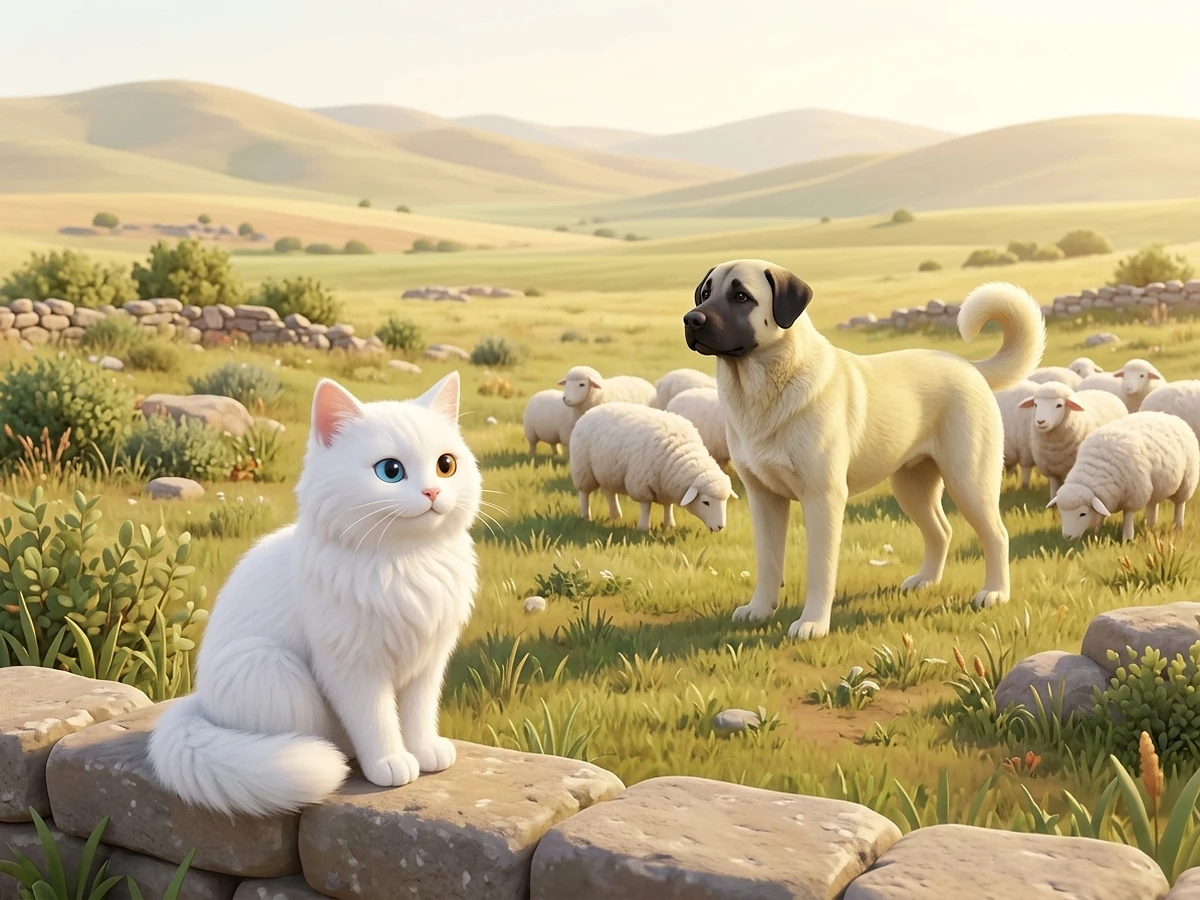
The Kangal and the Van cat come from these lands
The Kangal dog takes its name from the town of Kangal in Sivas, and it guards flocks of sheep. Some snow-white Van cats have eyes of two different colours, one blue and the other amber.
Why? A Kangal grows up with the flock and looks after it like its family, and it is wary of strangers. Van kittens are born with grey eyes. Their eye colour starts to change when they are 25 days old and shows clearly at about 40 days.
Try at home: Find Sivas and Van on a map of Türkiye. Are the two cities close to each other or far apart?
How they sense the world
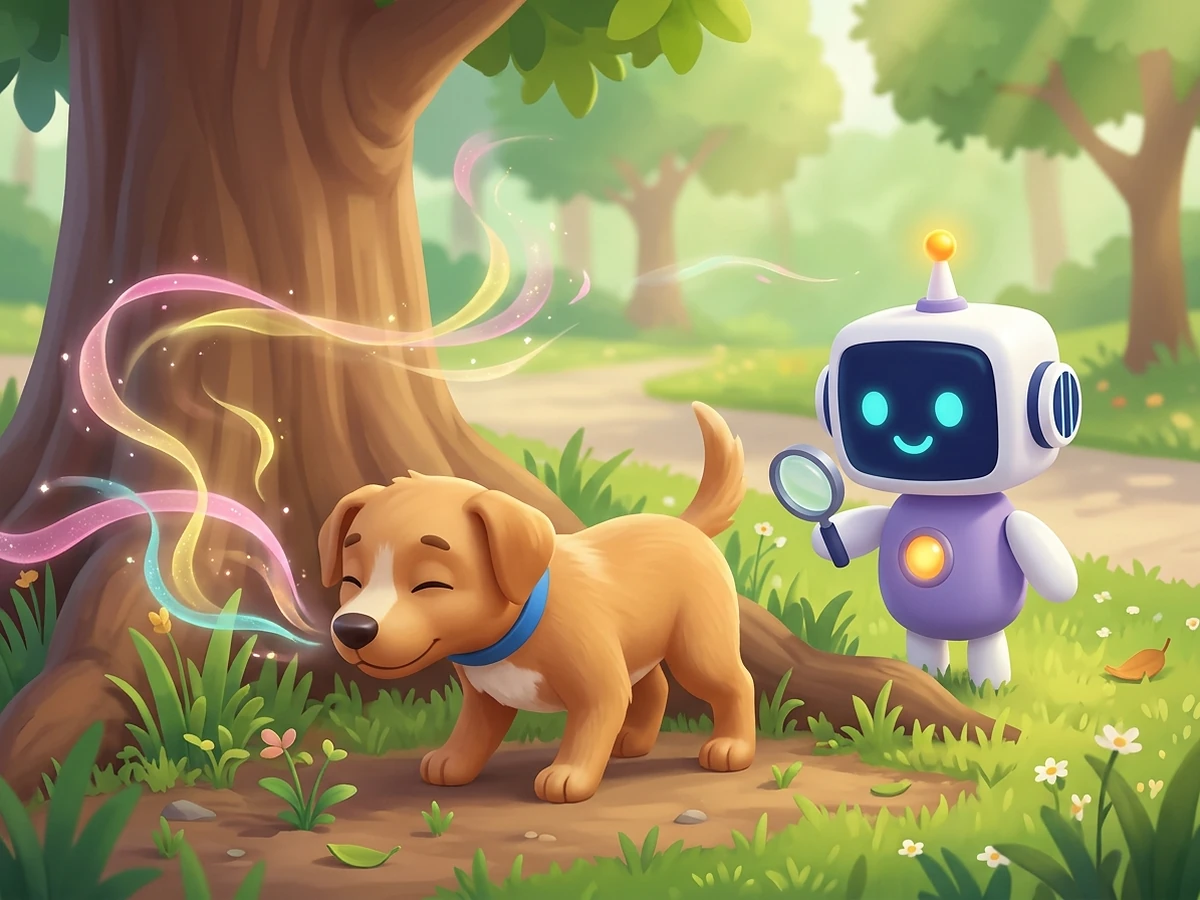
A dog sees the world with its nose
A dog's nose has up to 300 million smell sensors, and ours has about 6 million. One scientist says a dog could smell a teaspoon of sugar stirred into two Olympic pools full of water.
Why? The part of a dog's brain that works out smells is, for its size, 40 times bigger than ours. A dog that sniffs every tree on a walk is really reading the news. It finds out which animals have passed by.
Try at home: Close your eyes and let a grown-up hold a lemon, a piece of orange peel and some cinnamon under your nose, one by one. How many did you guess? A dog would find it much easier.

A cat's whiskers work like a measuring tape
A cat's whiskers are twice as thick as its other hairs and their roots sit three times deeper than the other hairs. At the root of each whisker there are lots of nerve endings.
Why? The whiskers spread out about as wide as the cat's body, so they work like a measuring tape. If a cat pushes its head into a gap and its whiskers touch the sides, it knows it cannot get through. Whiskers also feel the air moving, so a cat's whiskers must never be cut.
Try at home: Watch the whiskers of a cat you know. When it is curious they point forwards, and when it is scared they press flat against its face.
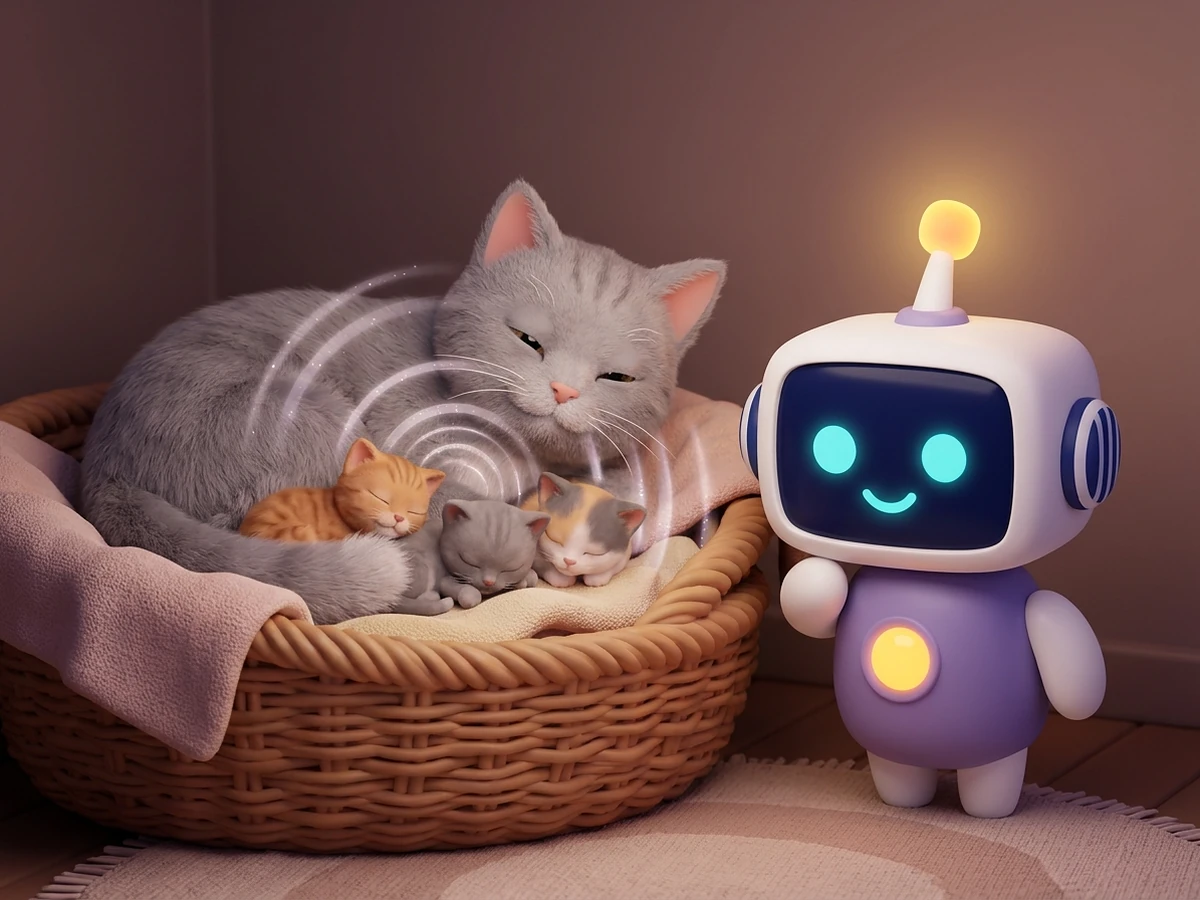
Purring usually means happy, but not always
Cats usually purr when they are happy and relaxed. A mother cat purrs to tell her kittens that all is well, and the kittens purr while they feed.
Why? Cats can also purr when they are ill, hurt or frightened, perhaps to calm themselves down. So we do not only listen to the sound, we also look at the ears, the eyes and the body.
Try at home: When a cat you know is purring beside you, look at its ears and eyes. Are the ears relaxed and forward? Are the eyes half closed?

Dogs hardly sweat, they cool down with their tongues
We sweat all over our skin, but a dog's sweat glands are mostly in its paw pads. Dogs cool down by putting out their tongues and panting fast.
Why? When a dog pants, the wet inside its mouth dries off and cools its body, but this does not work as well as sweating. When it is 22 degrees outside, the inside of a closed car can quickly reach 47 degrees. So a dog must never be left in a car.
Try at home: In summer, put a bowl of clean water outside your door or on your balcony with a grown-up. The cats and dogs in the street get thirsty too.
Understanding and caring for them
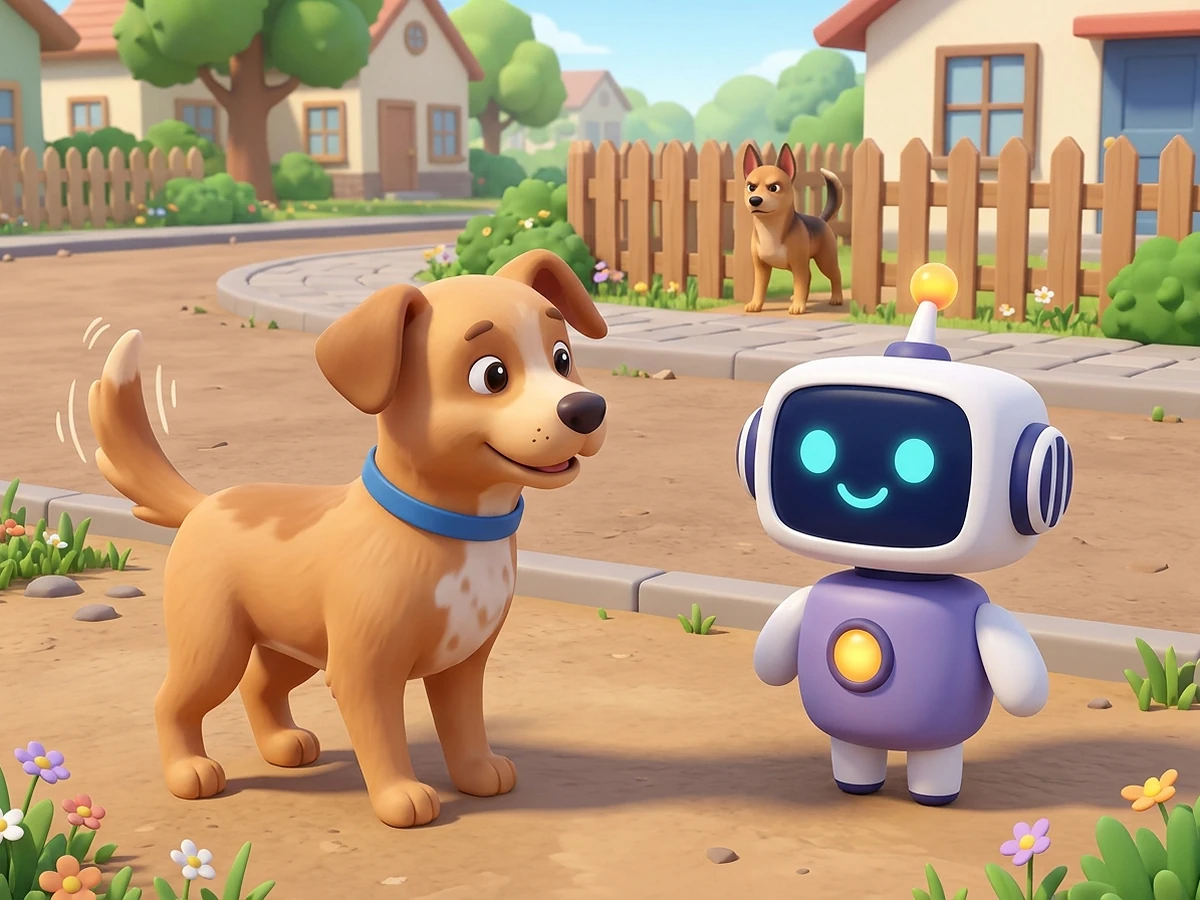
A wagging tail does not always mean “I'm happy”
A wagging tail tells you that a dog is excited. The excitement can be joy, and it can be anger.
Why? A wide, slow wag that wiggles the whole body shows a relaxed dog. A tail held high that shakes stiffly and fast shows a tense dog. So we look at the ears, the eyes, the mouth and the way it stands as well.
Try at home: Watch a dog from a distance. How is its tail wagging? What are its ears and body telling? Tell a grown-up what you saw.

A slow blink tells a cat “I trust you”
Scientists blinked slowly at cats. The cats blinked slowly back and came closer to the person who had blinked.
Why? Staring hard at a cat for a long time can make it uneasy. Slowly narrowing and closing your eyes is like saying “I trust you”. A tail held straight up is how a cat says hello.
Try at home: Look at a cat you know from a little way off. Slowly narrow your eyes, close them for a couple of seconds, then open them. Does the cat blink slowly back?
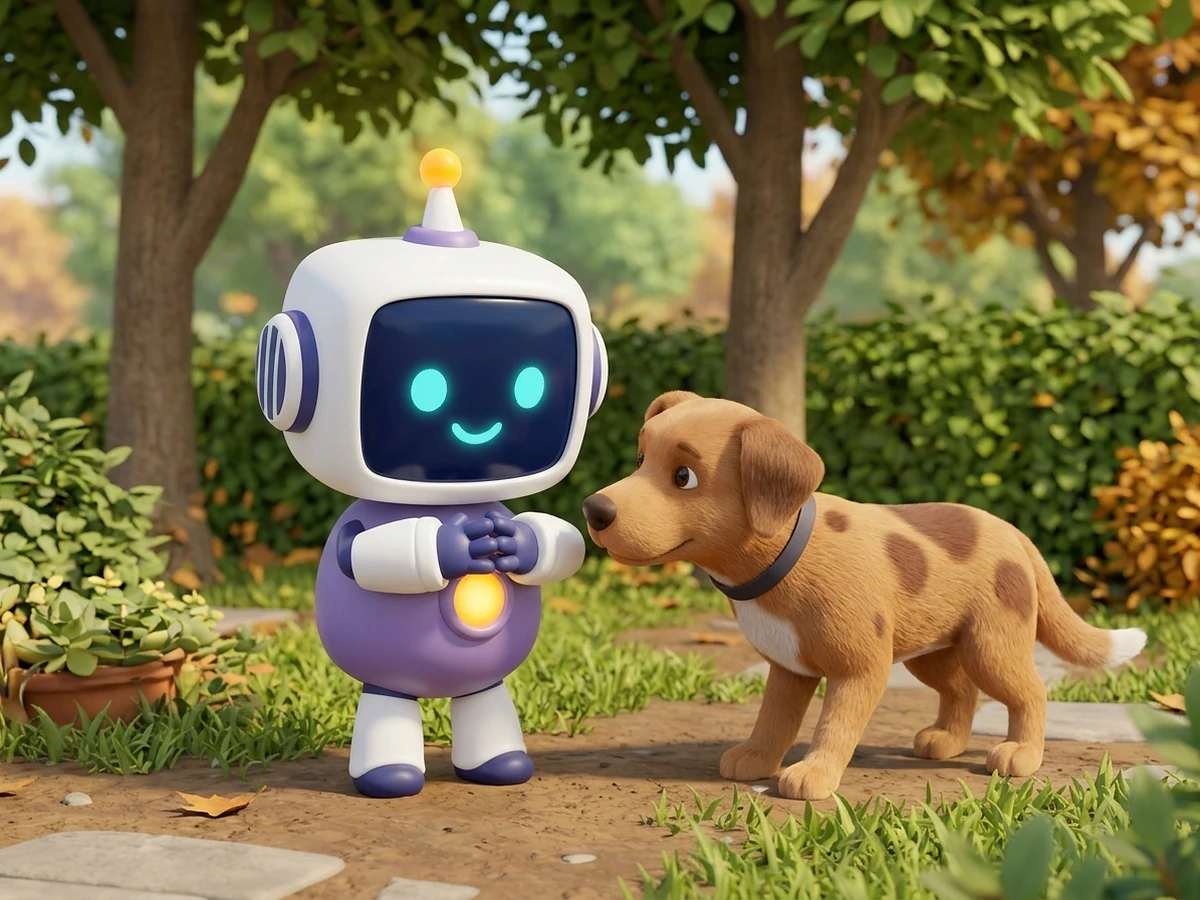
If a dog you don't know comes, be a tree
If a dog you don't know runs towards you, don't run away and don't shout. Stand like a tree, fold your hands in front of you like branches, look at your feet and count in your head.
Why? To a dog, a running child looks like a playmate running away, so the dog follows. A tree that does not move is boring, and the dog usually sniffs and goes away. Then walk away slowly and tell a grown-up what happened.
Try at home: Play “be a tree” with a grown-up. When they say “a dog is coming”, fold your hands, look at your feet and count to 10 in your head.

No milk for cats, no chocolate for dogs
Most cats cannot digest the sugar in milk once they grow up, so cow's milk can give them a tummy ache. Chocolate, grapes and onions are bad for cats and dogs too.
Why? A kitten's body can digest its mother's milk, but this ability fades as it grows. Not everything that tastes good to us is good for them. Ask the owner before you give an animal any food.
Try at home: Look at the food in your kitchen with a grown-up. Which foods must a dog or a cat never eat? Make a list and stick it on the fridge.

If an animal bites or scratches you, tell someone at once
If a cat or a dog bites or scratches you, tell a grown-up at once, even if the wound is small. The wound is washed with plenty of water and soap for at least 15 minutes, and then you go to a doctor.
Why? Some illnesses can pass on through an animal's spit, and the most dangerous one is rabies. Washing the wound at once and the vaccine the doctor gives stop rabies. That is why it takes courage to tell, not to hide it.
Try at home: With a grown-up, find out where your nearest health centre or hospital is.
What is it telling?

Piko is learning the language of animals. On each page, look at the dog or the cat and read Piko's note. Then choose what the animal is telling and what you would do.
Cats and Dogs quiz
Ten questions, one at a time. A wrong answer is not a loss: try again, and a hint is there.
Games and fact pages
For grown-ups
- The aim of this world: to see where dogs and cats came from, how they sense the world, and above all how they tell us what they feel with their bodies, so that a child can read an animal's signals and keep both the animal and themselves safe. It prepares for the topics of living things, animal care and responsibility in primary Life Studies and Science.
- Most dog bites to children come from a dog the child knows, often at home (AVMA, 2026). Never leave a young child alone with a dog, even a gentle family pet, and teach the three rules of this world: ask the owner, let the dog come to you, and leave a dog alone while it eats or sleeps.
- Ask after the game: how did you know the wagging dog was not happy? What told you that Caramel did not want the hug?
- Do it together: practise “be a tree” at home a few times, so that standing still comes without thinking if a strange dog runs up.
- Talk about Piko's mistake: he wanted to love Smoky and scared her instead. What did he do next? Saying sorry and waiting is a lesson for friendships with people too.
- Health note: in Türkiye, any bite or scratch from a cat or dog, even a small one, should be washed with soap and water and seen by a health centre the same day, because of the risk of rabies. Give pets their own food and fresh water.
- Sources are listed in this section. Breed facts are kept general on purpose: any dog of any breed can bite, and any cat can scratch, when it is afraid. Game progress is saved only on this device.
Sources
- The ancestors of dogs were wolves: Natural History Museum (London), “Wolves to woofs: The story of our oldest companions”; Tancredi and Cardinali, Genes (2023), “Being a Dog: A Review of the Domestication Process”
- Cats came to live with people thanks to mice: ScienceDaily (2004), “Oldest Known Evidence Of Cat Taming Found In Cyprus”; Driscoll et al., Scientific American (2009), “The Taming of the Cat”
- The Kangal and the Van cat come from these lands: Fédération Cynologique Internationale (FCI), Standard No. 331, “Kangal Çoban Köpeği (Kangal Shepherd Dog)” (2018); Van Yüzüncü Yıl University, Van Cat Research and Application Centre, “Van Kedisi Hakkında”
- A dog sees the world with its nose: PBS NOVA, “Dogs' Dazzling Sense of Smell”
- A cat's whiskers work like a measuring tape: International Cat Care, “Why do cats..?”; Cats Protection, “Why do cats have whiskers?”
- Purring usually means happy, but not always: International Cat Care, “Why do cats..?”; Cats Protection, “Why does my cat purr?”
- Dogs hardly sweat, they cool down with their tongues: American Kennel Club (AKC), “Do Dogs Sweat? How Dogs Cool Down in Hot Weather”; Blue Cross, “How To Keep Dogs Cool In The Summer Heat”
- A wagging tail does not always mean “I'm happy”: American Kennel Club (AKC), “Understanding Dog Body Language: Decipher Dogs' Signs & Signals”; ASPCApro, “Canine Body Language Tips”
- A slow blink tells a cat “I trust you”: Humphrey et al., Scientific Reports (2020), “The role of cat eye narrowing movements in cat–human communication”; Cats Protection, “Cat Body Language”
- If a dog you don't know comes, be a tree: Doggone Safe, “Be a Tree” dog bite prevention programme; American Veterinary Medical Association (AVMA), National Dog Bite Prevention Week (2026)
- No milk for cats, no chocolate for dogs: PDSA, “Vet Q&A: Can cats drink milk?”; ASPCA, “People Foods to Avoid Feeding Your Pets”
- If an animal bites or scratches you, tell someone at once: World Health Organization (WHO), “Rabies” (fact sheet); Republic of Türkiye Ministry of Health, “Kuduz”
- International Cat Care, “Cat Communication”
- VisionServe Alliance, “Guide Dog Etiquette”