

Topic world · ages 5–10
Animals
Meet record-breaking animals, find out who lives where and learn to read footprints. Every card also tells you why. Then try the 10-question quiz.
Cards
Record breakers
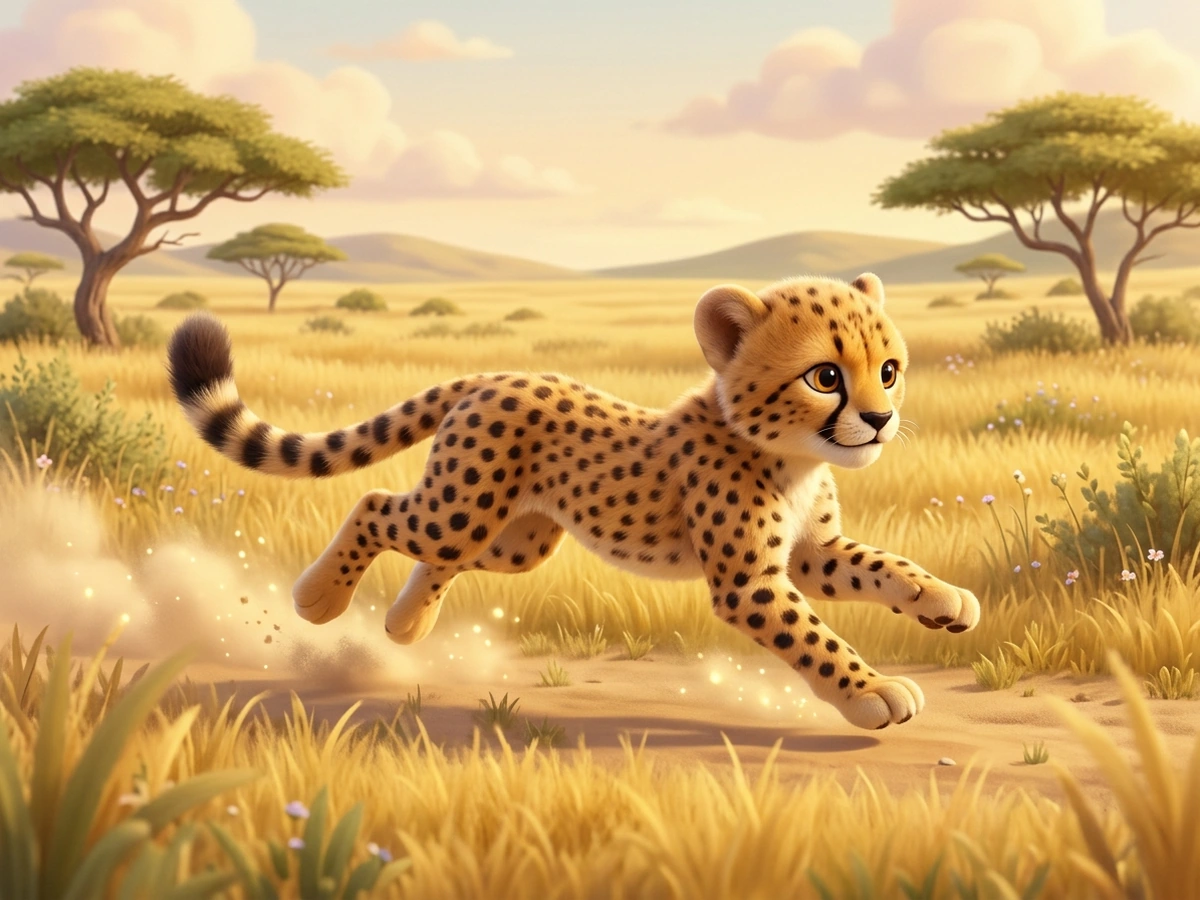
The cheetah is the fastest runner on land
Scientists put collars on wild cheetahs to measure their runs. The fastest one reached 93 kilometres an hour.
Why? It cannot keep this speed up for long. What wins the chase is how fast it can speed up, brake and turn.
Try at home: In a park, run five steps, then stop and turn at once. Which is harder, running fast or turning fast?
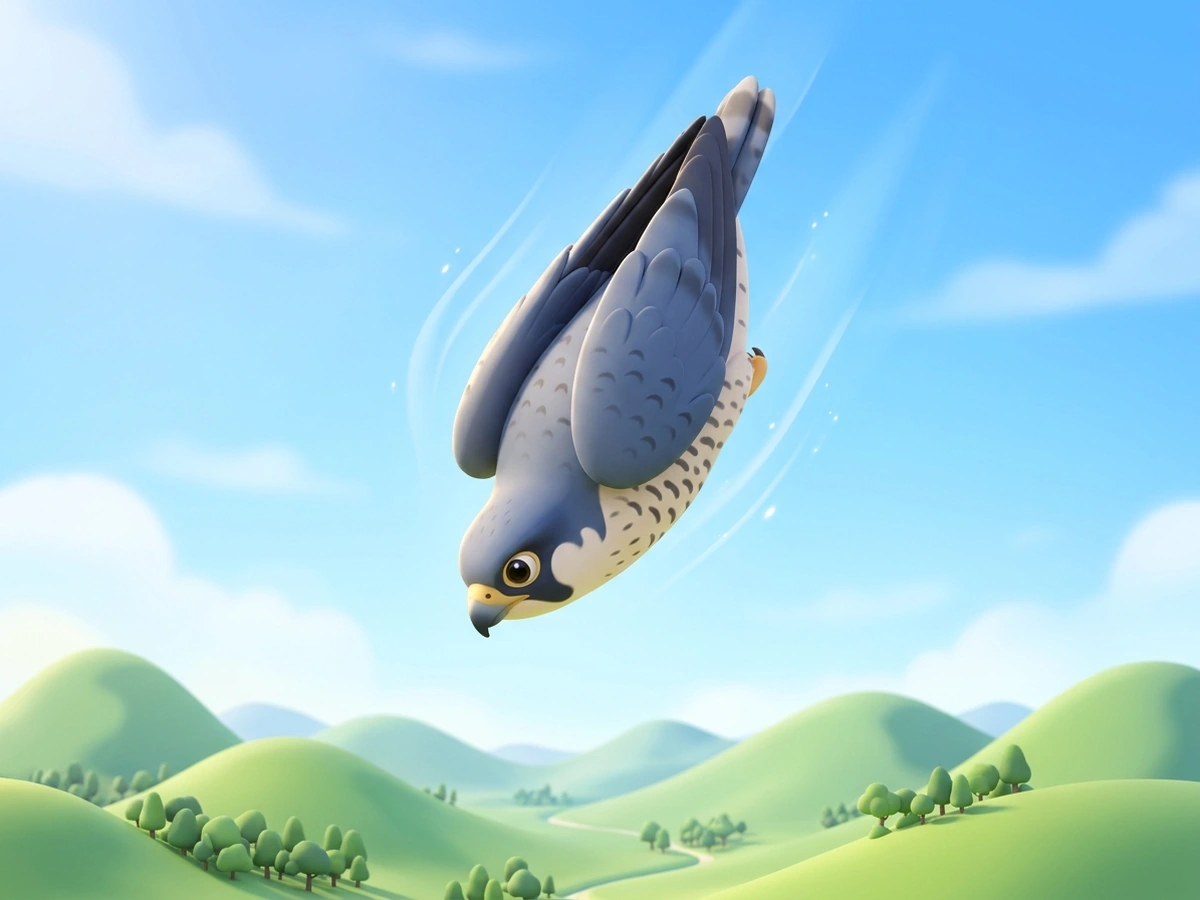
The peregrine falcon is the fastest diver
When a peregrine falcon dives at its prey from high up, it reaches about 320 kilometres an hour. No animal is known to go faster.
Why? As it dives, it pulls its wings in close to its body, so the air slows it down less.
Try at home: Drop a flat sheet of paper, then crumple it into a ball and drop it again. Which one falls faster?
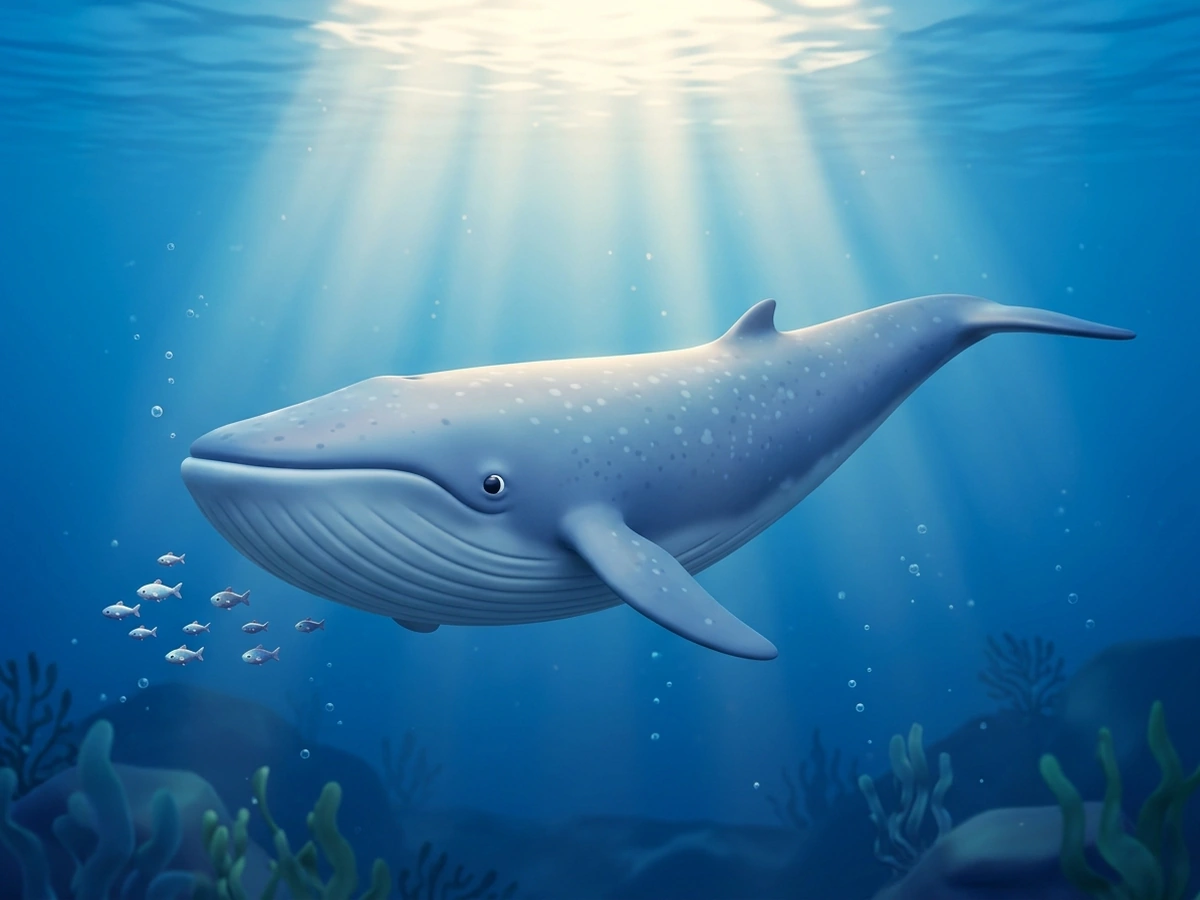
The blue whale is the biggest animal
The blue whale is the biggest animal known to have lived on Earth. The water helps it carry its huge body.
Why? On land, an animal's weight grows faster than the strength of its bones. In the sea, the water holds the body up.
Try at home: In the bath, push a floating toy under the water with your hand. Can you feel the water pushing it back up?
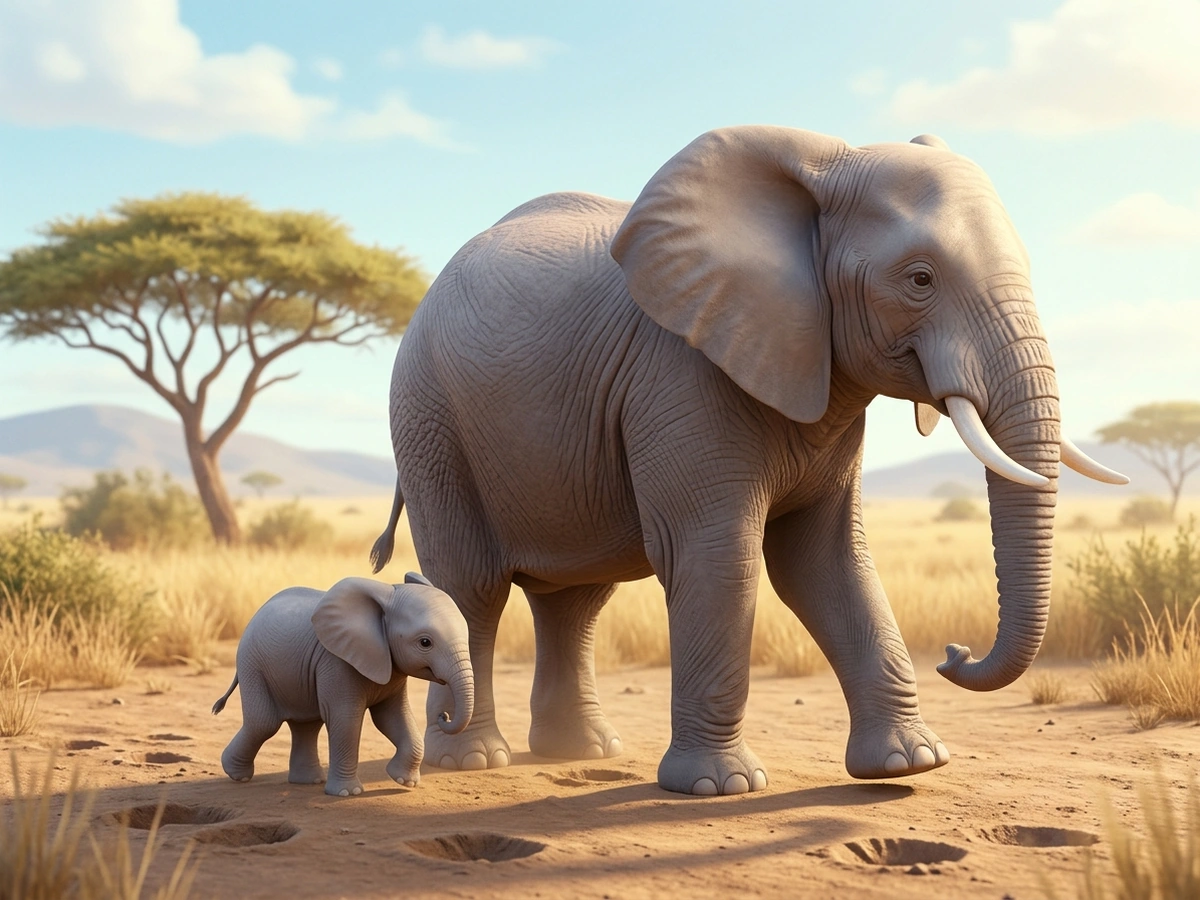
The elephant is the heaviest land animal
The African elephant is the heaviest animal that lives on land. Its huge ears help it keep cool.
Why? Its ears are full of tiny blood vessels. When the elephant flaps its ears, the blood in them cools down.
Try at home: On a hot day, fan your face with a sheet of paper. Can you feel it cool you down?
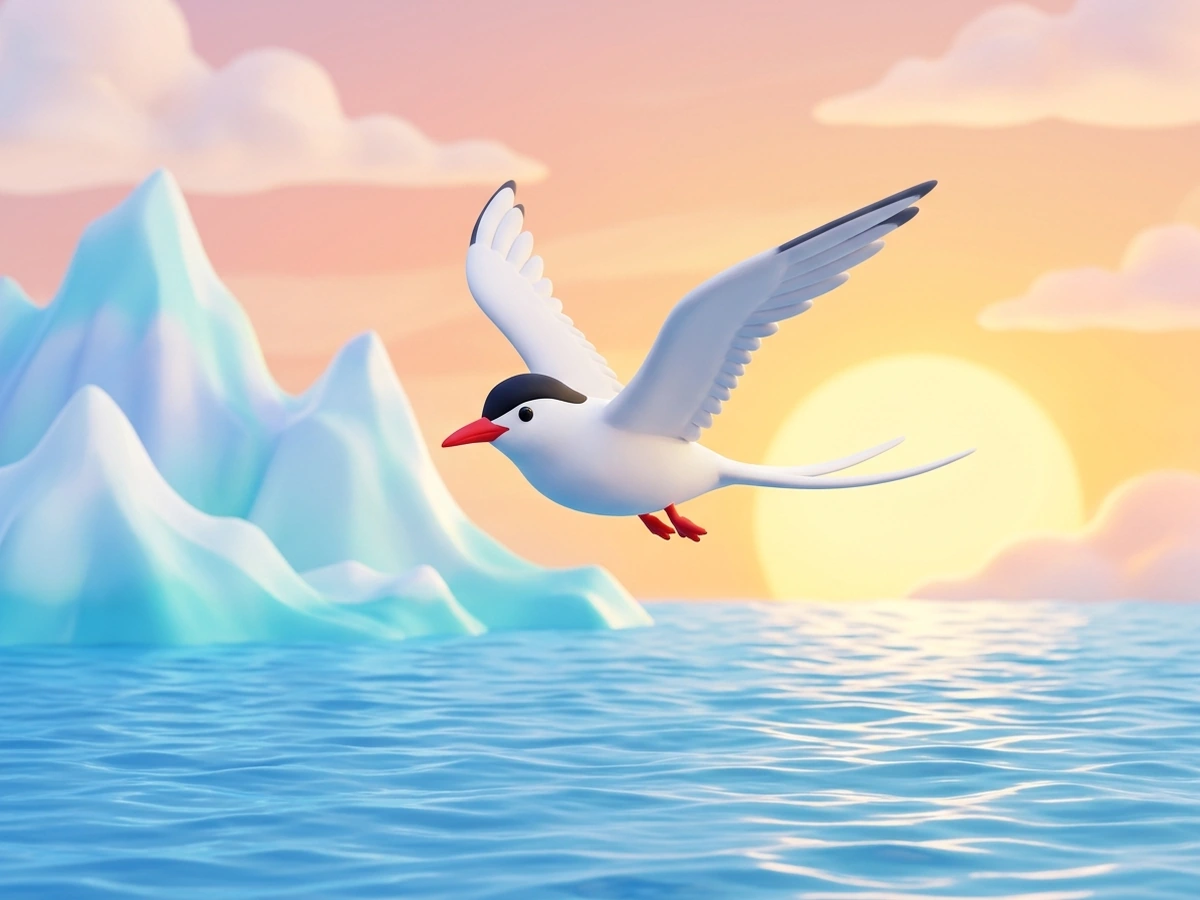
The Arctic tern makes the longest migration
Every year the Arctic tern flies from the far north to the far south and back. Scientists tracked the trip at about 70,000 kilometres.
Why? When summer ends in the north, it flies south, where summer is starting. So it lives two summers a year and sees a lot of daylight.
Try at home: Find a globe or a world map. Trace a line with your finger from the very top to the very bottom, then back.
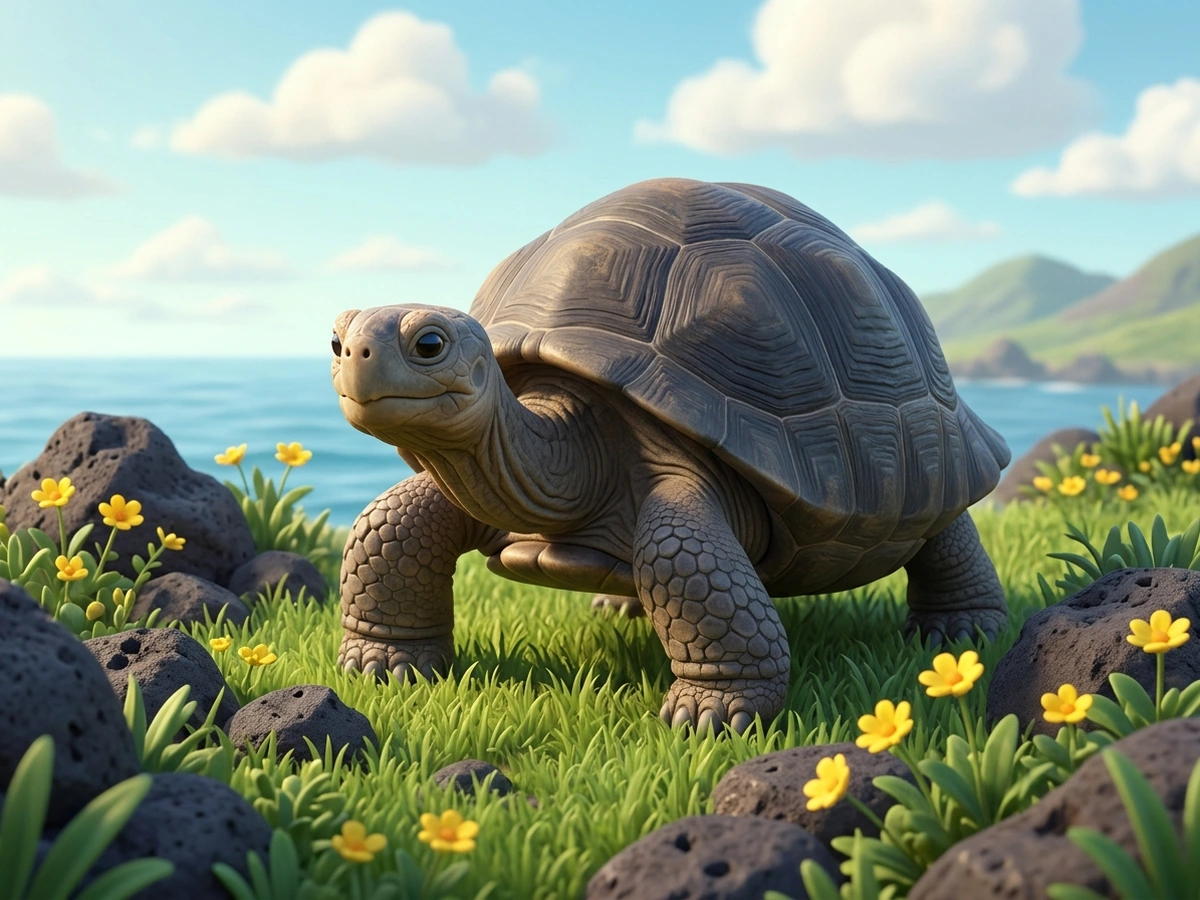
Giant tortoises can live more than 100 years
Giant tortoises can live for more than 100 years. Turtles and tortoises are among the slowest-ageing animals.
Why? Scientists think the hard shell is part of the reason. It protects them, and protected animals can age more slowly.
Try at home: Walk very slowly, like a tortoise, for one minute. What did you notice that you usually miss?
Who lives where?
Desert
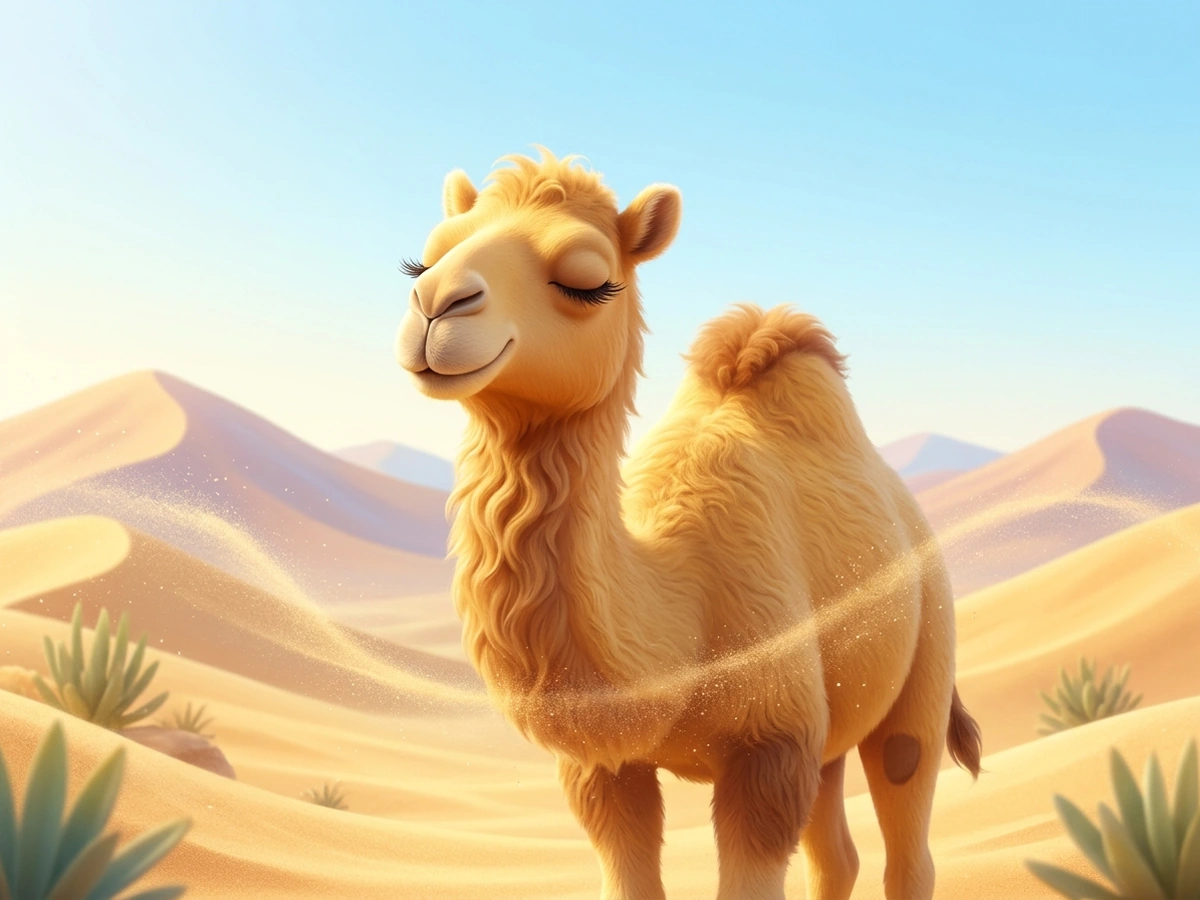
The camel shuts out the sand
A camel can close its nostrils when the wind blows sand. Its long eyelashes protect its eyes.
Why? Desert winds blow sand around. Sand in the nose and eyes would make breathing and seeing hard.
Try at home: Watch a grown-up blink. How do the eyelashes cover the eyes?
Polar lands
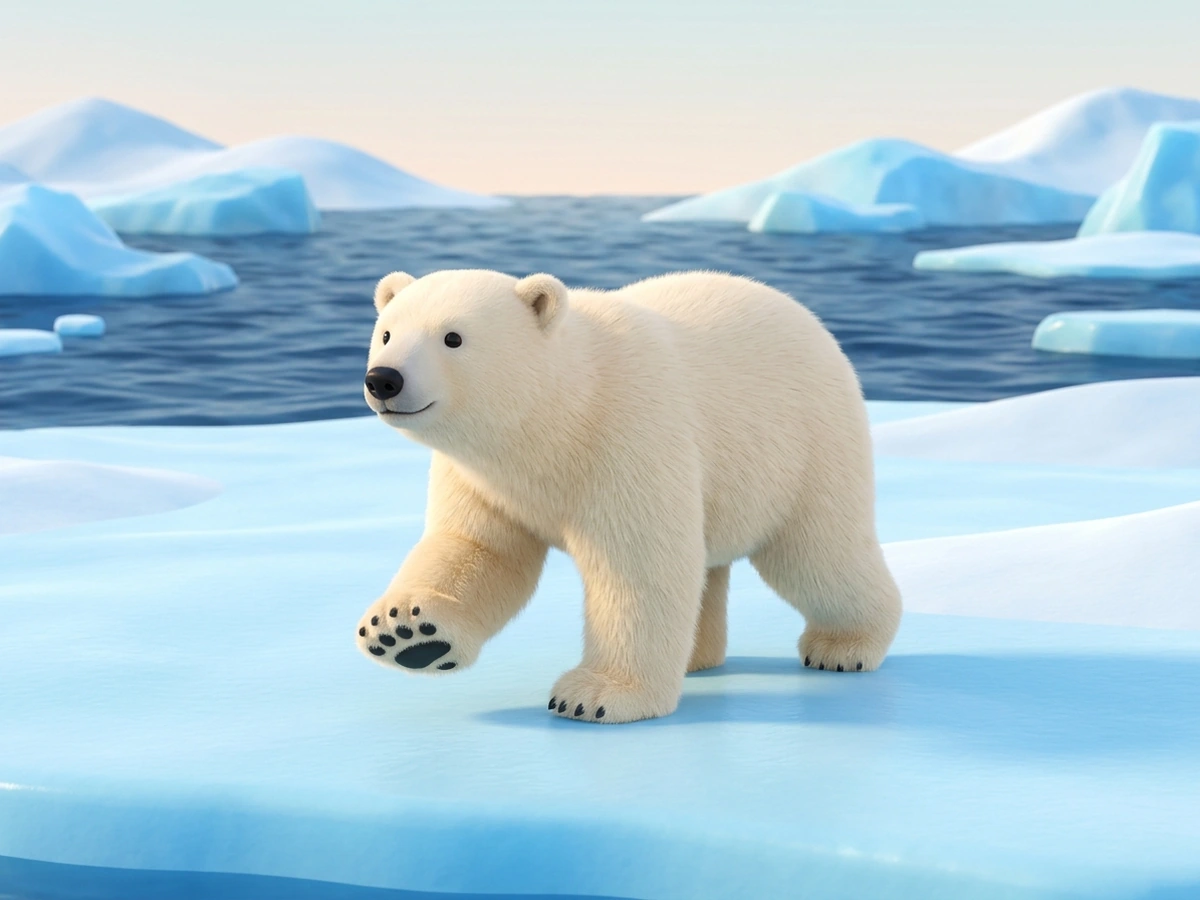
The polar bear rarely slips on ice
The soles of a polar bear's paws have tiny bumps that grip the ice. Under its skin, a layer of fat up to 11 centimetres thick keeps it warm.
Why? Ice is slippery and the sea is very cold. The bumps stop it slipping, and the fat keeps its warmth in icy water.
Try at home: Tilt a tray a little. Put a smooth lid on it, then a rough sponge. Which one slides and which one holds on?
Forest
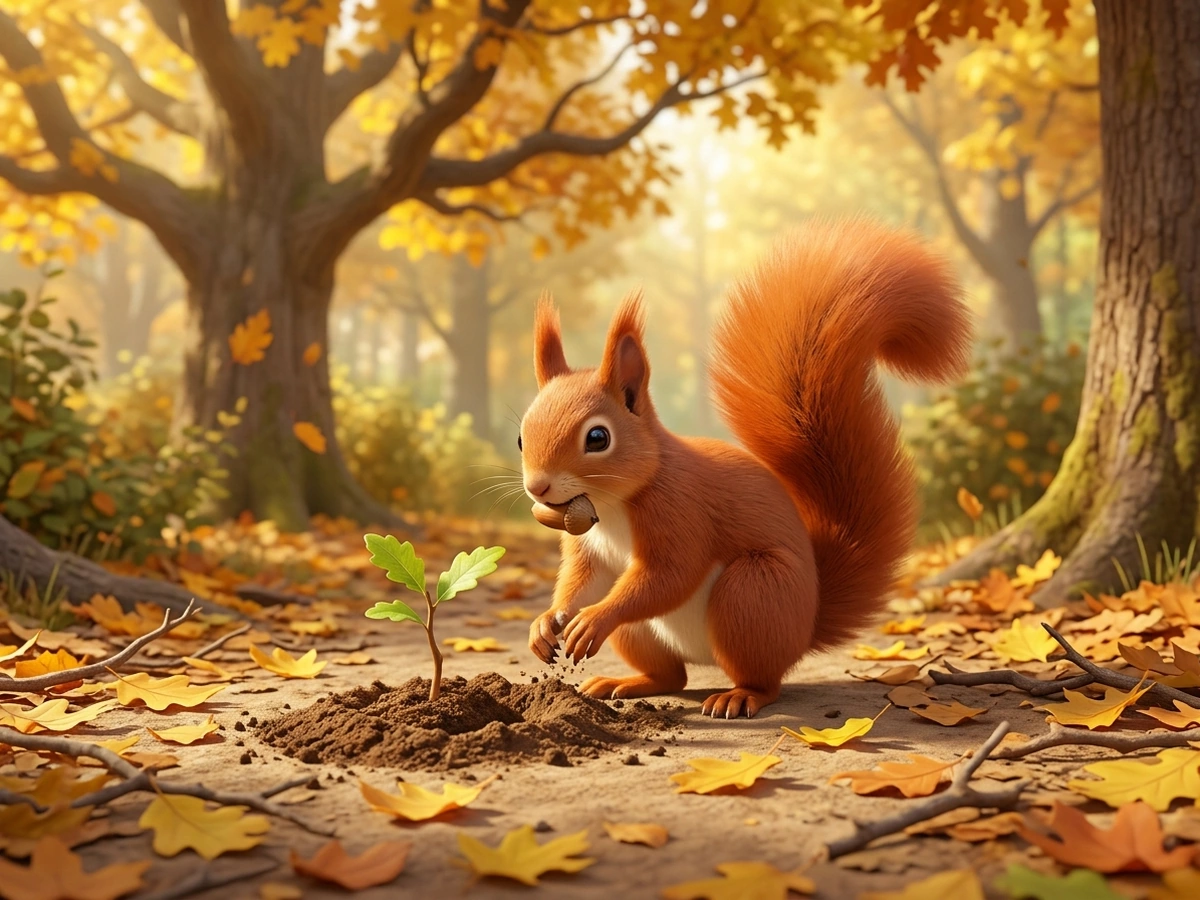
The squirrel plants trees
Before winter, a squirrel buries nuts and acorns in many different spots. It never finds some of them again.
Why? The seeds it does not find can sprout and grow into trees. Without knowing it, the squirrel helps the forest grow.
Try at home: Plant a bean in a pot and water it every day. Count together how many days it takes to sprout.
Savanna
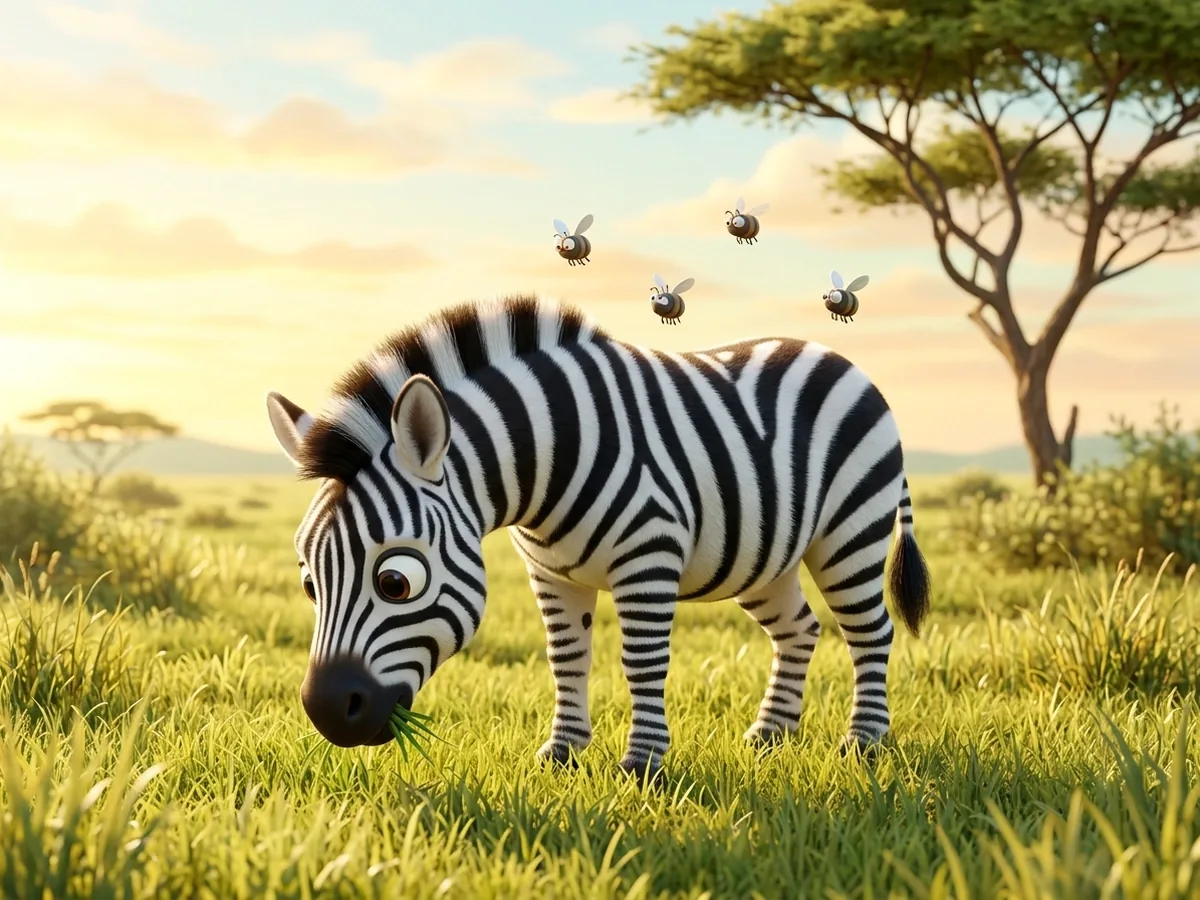
Zebra stripes confuse flies
Zebras live on the grassy savanna of Africa. Scientists dressed horses in striped and plain coats. Biting flies landed less on the striped coats.
Why? Flies find it hard to land on stripes. So the stripes help protect zebras from biting flies.
Try at home: Draw stripes on one piece of paper and fill another with one colour. Which one confuses your eyes more?
Footprints
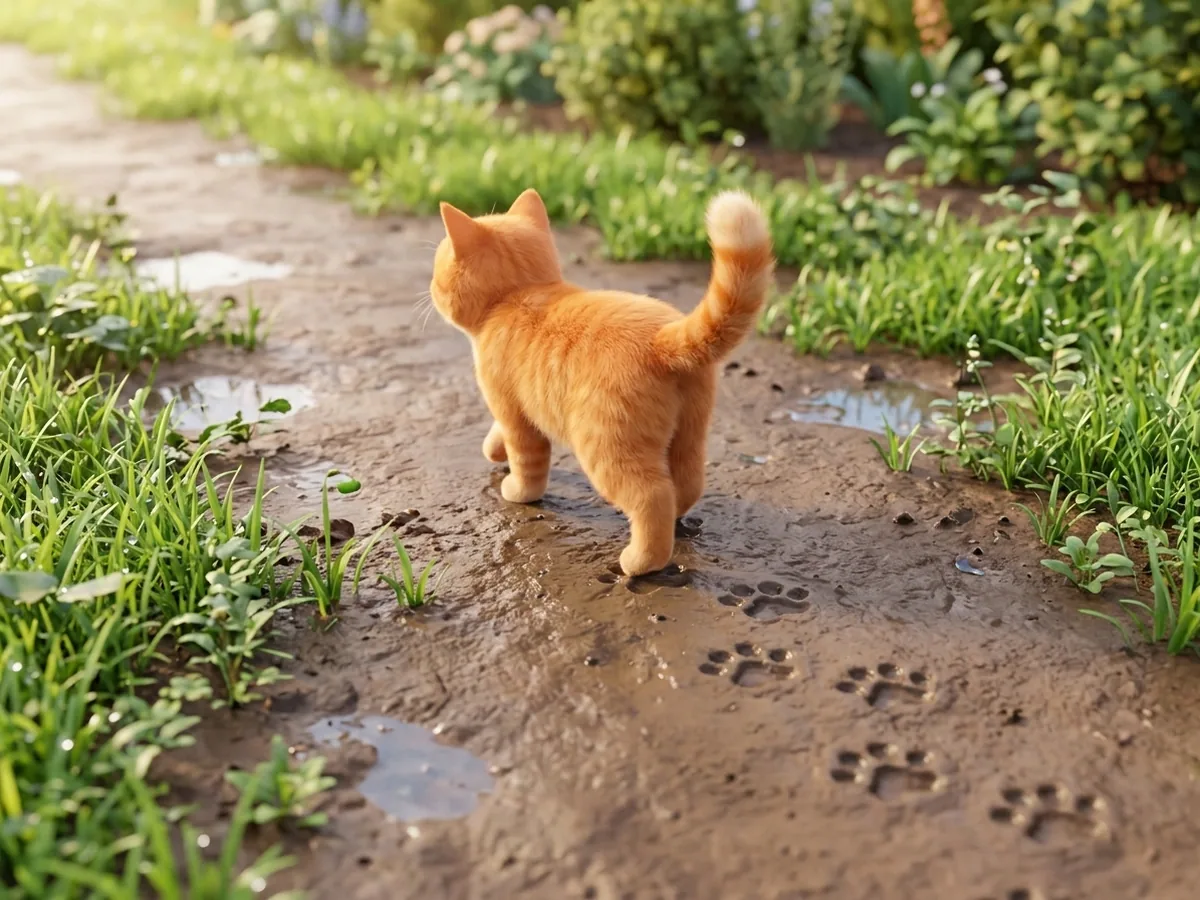
A cat's print shows no claws
A cat's print shows four toes and no claw marks. A dog's print shows claw marks too.
Why? A cat pulls its claws in when it walks. A dog cannot, so its claws touch the ground.
Try at home: Look for prints in the mud after rain, or in fresh snow. Can you see claw marks?
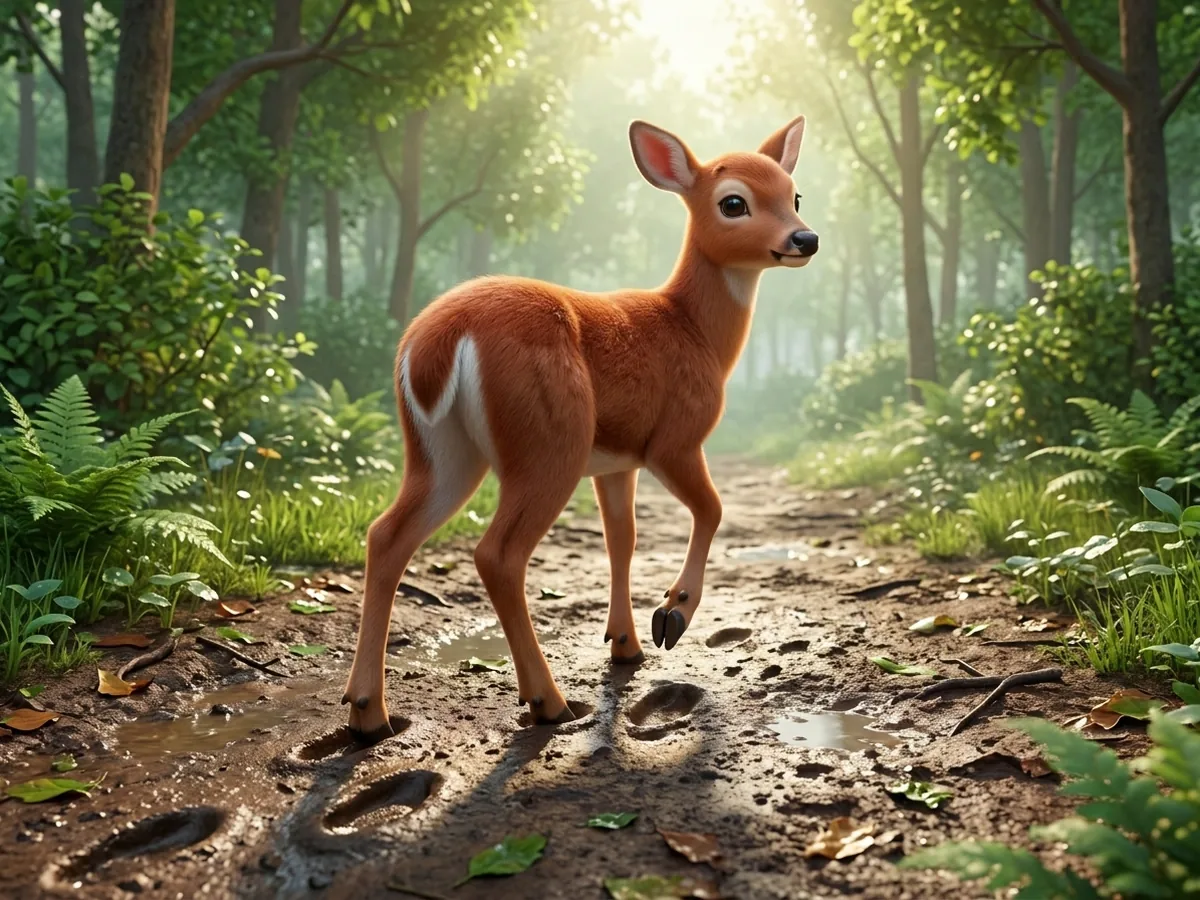
A deer leaves two long marks
A deer's hoof is split in two. It leaves two long marks with a gap between them.
Why? The shape of a print shows the shape of the foot. That is how we can tell an animal without seeing it.
Try at home: Press your fingers into play dough or sand. Ask a grown-up to press theirs too. Can you guess whose print is whose?
Footprint detective
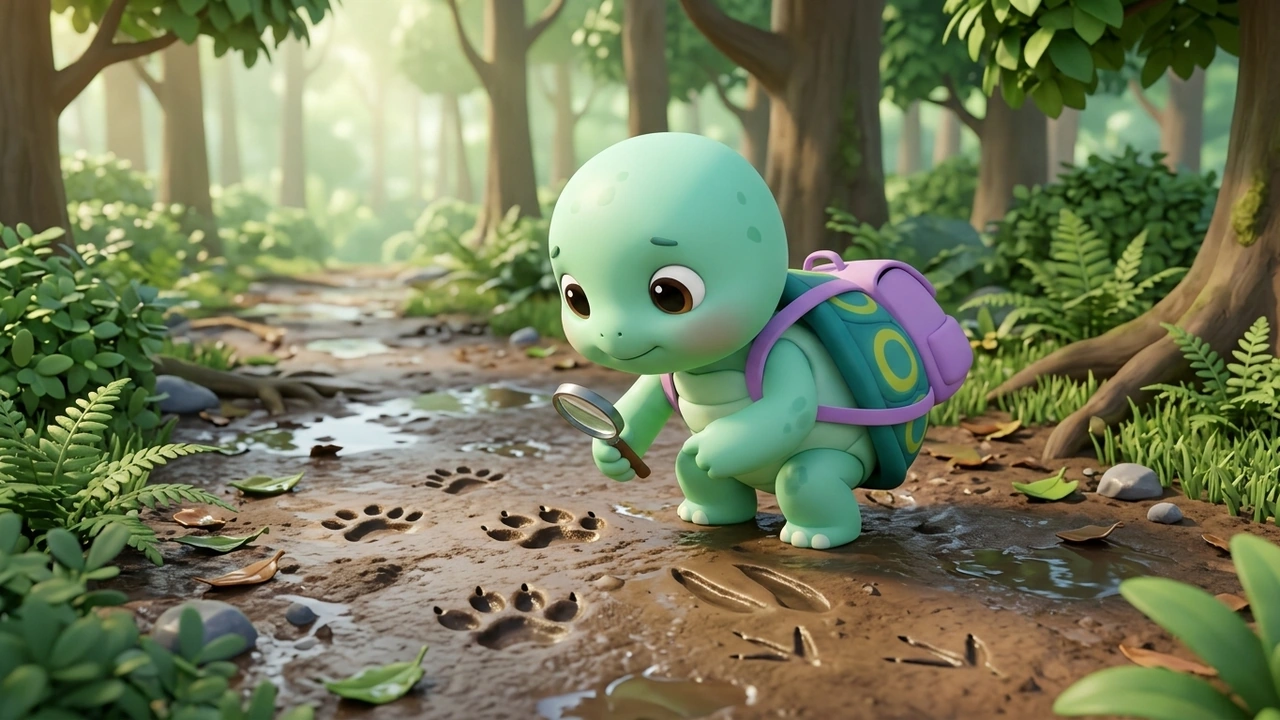
Tosbi found four prints in the mud. Find who made each one.
Animals quiz
Ten questions, one at a time. A wrong answer is not a loss: try again, and a hint is there.
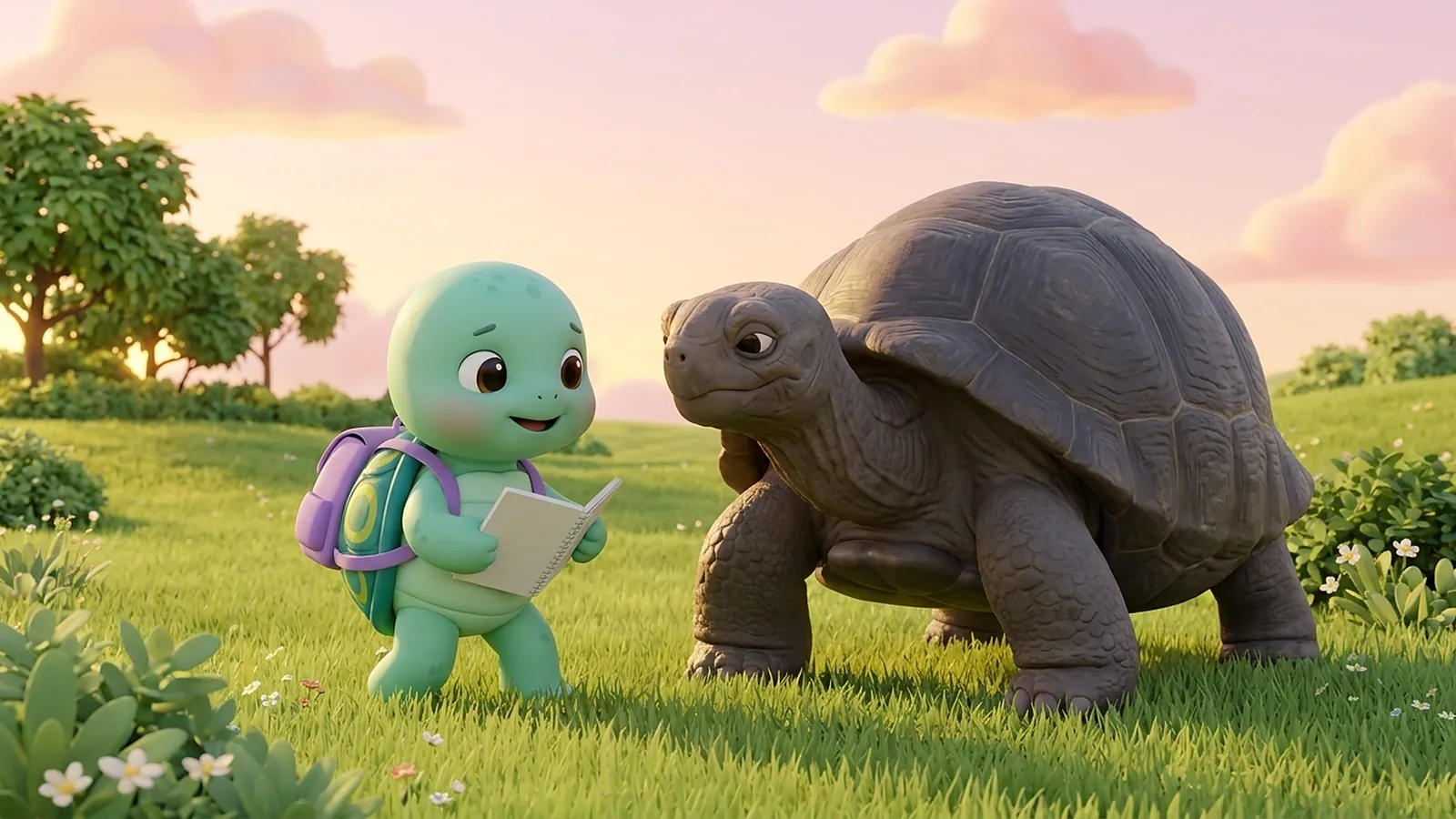
Games and fact pages
Books
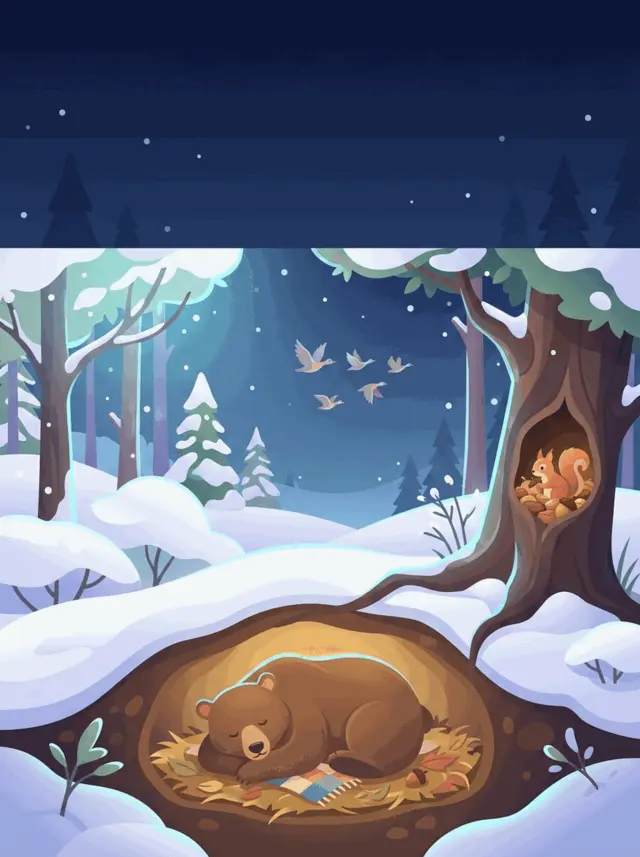

Colouring pages
For grown-ups
- The aim of this world: to notice how an animal's body fits the way it lives (adaptation), and that every claim has a reason and a source. It prepares for the grade 3 science unit on living things and their habitats.
- Ask: which animal near our home fits its place well? A cat, a sparrow or an ant will do. What helps it?
- Ask after the quiz: which animal's strength is most like yours, and why?
- Do it together: on a walk, look for prints in the mud after rain or in fresh snow. Draw the print you find, then use the footprint cards to guess whose it is.
- Sources are listed in this section. Game progress is saved only on this device.
Sources
- The cheetah is the fastest runner on land: Wilson et al. (2013), Nature, “Locomotion dynamics of hunting in wild cheetahs”
- The peregrine falcon is the fastest diver: Guinness World Records, “Fastest bird (diving)”; Ponitz et al. (2014), PLOS ONE, “Diving-flight aerodynamics of a peregrine falcon”
- The blue whale is the biggest animal: NOAA Fisheries, “Blue whale”; Popular Science, “How blue whales became Earth's largest creature—ever”
- The elephant is the heaviest land animal: Popular Science (2026), “Why do elephants have such big ears?”; University of Notre Dame, “How the largest land animal stays cool”
- The Arctic tern makes the longest migration: Egevang et al. (2010), PNAS, “Tracking of Arctic terns Sterna paradisaea reveals longest animal migration”
- Giant tortoises can live more than 100 years: Reinke et al. (2022), Science, aging rates in ectothermic tetrapods (Penn State summary); Galápagos Conservancy, “Giant tortoises”
- The camel shuts out the sand: San Diego Zoo Wildlife Alliance Library, “Camels: Characteristics”
- The polar bear rarely slips on ice: Polar Bears International, “Adaptation”
- The squirrel plants trees: Forest Preserve District of Will County, “Why do squirrels bury nuts?” (citing the Smithsonian Science Education Center)
- Zebra stripes confuse flies: Caro et al. (2019), PLOS ONE, “Benefits of zebra stripes” (University of Bristol news)
- A cat's print shows no claws: Woodland Trust, “Animal tracks in snow: print identification”
- National Geographic, “Chasing daylight”